Leave Your Message
Explore our curated squalane-powered formulations engineered for deep hydration, barrier restoration, anti-aging efficacy, and clean-beauty compliance — trusted by global cosmetic brands and formulators.
Squalane is a saturated, stable hydrocarbon derived from the hydrogenation of squalene — a naturally occurring lipid found in shark liver oil, olive oil, sugarcane, amaranth seed, and rice bran. In the context of modern clean beauty and sustainable cosmetics, plant-derived squalane (primarily from sugarcane and olive sources) has emerged as the gold standard ingredient for moisturizing and barrier-repair product lines.
Unlike many occlusive emollients, squalane is lightweight, non-greasy, and structurally analogous to the skin's own natural sebum. It penetrates rapidly into the stratum corneum without clogging pores, making it universally compatible with all skin types — from dry and mature skin to oily, acne-prone, and sensitive complexions. This exceptional biocompatibility has driven its rapid adoption across premium skincare, pharmaceutical-grade topicals, and even advanced wound-care formulations.
🔬 Key Insight: Human skin naturally produces squalene as part of its sebum composition (approximately 13% of total sebum lipids). Topically applied squalane mimics and replenishes this natural lipid, directly supporting the skin's moisture-retention architecture and barrier integrity — a mechanism no synthetic polymer can fully replicate.
Squalane's moisturizing action operates through multiple pathways that distinguish it from conventional humectants like glycerin or hyaluronic acid:
These combined mechanisms make squalane uniquely suited as the central active in moisturizing product lines — delivering both immediate sensory elegance and long-term structural skin health.
The skin barrier — primarily the stratum corneum's lipid matrix — is the body's primary defense against environmental aggressors, allergens, pathogens, and moisture loss. When compromised by over-cleansing, UV exposure, harsh actives (retinoids, AHAs), or inflammatory conditions such as eczema and rosacea, the consequences range from chronic dryness to heightened sensitivity and accelerated aging.
Squalane addresses barrier dysfunction through direct lipid replenishment. In clinical barrier-repair formulations, squalane is typically combined with ceramides, cholesterol, and free fatty acids in ratios that mirror the skin's natural lamellar lipid composition (roughly 1:1:1 molar ratio). Squalane serves as both a functional lipid and a delivery vehicle, facilitating the incorporation of these barrier-critical lipids into the stratum corneum.
The global squalane market is undergoing rapid transformation driven by sustainability mandates, clean-beauty consumer demand, and breakthrough biotechnology — reshaping how brands source, formulate, and position squalane-based product lines.
Following regulatory and ethical pressure on shark-derived squalene, the market has decisively shifted to olive- and sugarcane-derived squalane. Sugarcane fermentation routes now account for over 60% of premium cosmetic-grade squalane supply, offering superior oxidative stability, consistent purity (>99%), and a compelling sustainability narrative for brand marketing.
Next-generation biotech companies are engineering yeast strains (notably Saccharomyces cerevisiae) to produce squalene via metabolic engineering of the mevalonate pathway. This fermentation-derived squalane achieves unprecedented purity, eliminates agricultural land use, and enables cost-stable production at industrial scale — positioning it as the future supply backbone for the cosmetics industry.
The global squalane market was valued at approximately USD 167 million in 2023 and is projected to reach USD 320+ million by 2030, growing at a CAGR of ~10.2%. Moisturizing and barrier-repair applications collectively represent the largest end-use segment, driven by the global rise in sensitive skin conditions and the premiumization of daily skincare routines across Asia-Pacific, North America, and Europe.
Retail giants including Sephora, Ulta, and major European pharmacy chains now mandate clean-beauty compliance for shelf placement. Squalane's natural origin, biodegradability, and non-toxic profile make it a preferred ingredient for brands seeking COSMOS, Ecocert, and USDA Organic certifications — directly influencing raw material sourcing decisions at the formulation level.
The boundary between cosmetics and pharmaceuticals is blurring. Squalane is gaining traction as an excipient in drug delivery systems, vaccine adjuvant emulsions (MF59 formulation), and topical pharmaceutical preparations. This crossover is elevating quality and purity standards across the supply chain, benefiting premium cosmetic-grade suppliers with pharmaceutical-grade capabilities.
China, South Korea, and Japan collectively represent the fastest-growing demand centers for squalane in moisturizing and barrier-repair formulations. K-beauty's emphasis on "glass skin" and barrier-first skincare philosophy has normalized multi-step squalane application routines, while China's booming domestic cosmetics industry is creating unprecedented demand for high-purity cosmetic raw material suppliers with robust quality documentation.
In anhydrous face oil formulations, squalane functions as the primary carrier oil, offering a dry, silky finish unmatched by heavier alternatives like argan or marula oil. Its low viscosity (approximately 25–30 cSt at 25°C) and neutral odor make it the ideal base for concentrated active delivery systems. Formulators combine squalane with bakuchiol, retinol, niacinamide, and peptide complexes to create barrier-supporting anti-aging serums that deliver actives without irritation — a critical advantage for sensitive and compromised skin types.
Squalane integrates seamlessly into both oil-in-water (O/W) and water-in-oil (W/O) emulsion systems. At concentrations of 3–15%, it imparts a luxurious skin feel, improves spreadability, and enhances the stability of emulsion systems by acting as a co-emulsifier stabilizer. In barrier-repair cream formulations, squalane is co-formulated with pseudo-ceramides and phytosterols to create a complete lipid matrix that rebuilds the stratum corneum's lamellar structure.
Dermatology-focused brands leverage squalane's hypoallergenic and non-comedogenic properties to formulate rosacea-calming moisturizers, post-procedure recovery balms, and eczema-targeted emollient therapies. Its compatibility with active pharmaceutical ingredients (APIs) including hydrocortisone and tacrolimus positions it as a preferred excipient in prescription-grade topical formulations. The absence of reactive unsaturated bonds eliminates the risk of oxidative degradation and associated skin sensitization — a key differentiator from plant oils containing linoleic or oleic acid.
Beyond skincare, squalane is increasingly incorporated into color cosmetics as a skin-conditioning agent and texture enhancer. In liquid foundations, BB creams, and tinted moisturizers, squalane improves pigment dispersion, extends wear time, and imparts a natural, skin-like finish. Its compatibility with mineral pigments, organic UV filters, and silicone polymers makes it versatile across the full spectrum of color cosmetic formulations. The "skincare-makeup" hybrid trend has made barrier-supporting ingredients like squalane a competitive differentiator in prestige color cosmetics.
The scalp shares the same barrier function architecture as facial skin, and squalane's benefits translate directly to scalp health formulations. In hair serums, scalp treatments, and conditioning masks, squalane reduces frizz, seals the hair cuticle, and provides lightweight conditioning without the build-up associated with silicones or heavy oils. Scalp barrier-repair products targeting seborrheic dermatitis and scalp eczema represent a high-growth niche where squalane's anti-inflammatory properties provide measurable clinical benefit.
⚙️ Formulation Tip: For maximum barrier-repair efficacy, combine squalane (8–12%) with ceramide NP (0.5–1%), cholesterol (0.5%), and palmitic acid (0.1–0.3%) in an emulsion base adjusted to pH 5.0–5.5. This ratio mimics the skin's natural lamellar lipid composition and delivers clinically measurable TEWL reduction within 4 weeks of daily use.
Founded in 2013 and headquartered in the prestigious high-tech zone of Xi'an, Xi'an Aoge Biotech Co., Ltd., along with its subsidiaries Xi'an Imaherb Biotech Co., Ltd. and Xi'an Nahanutri Biotech Co., Ltd., has established itself as a leading force in the cosmetics raw materials industry.
Our expansive cooperative factory, spanning 1,000 mu (approximately 165 acres), is equipped with state-of-the-art extraction technology. This advanced infrastructure allows us to manufacture a wide array of premium cosmetic raw materials. Our product line includes natural plant extracts specifically designed for organic cosmetics, as well as synthetic ingredients for high-end skincare formulations.
These raw materials serve as the foundation for a multitude of skincare, haircare, and makeup products, ensuring superior quality and efficacy throughout the entire production process. Our squalane raw materials are produced under rigorous pharmaceutical-grade quality protocols, making Aogebio a trusted partner for global cosmetic brands seeking reliable, high-purity squalane supply for moisturizing and barrier-repair product lines.
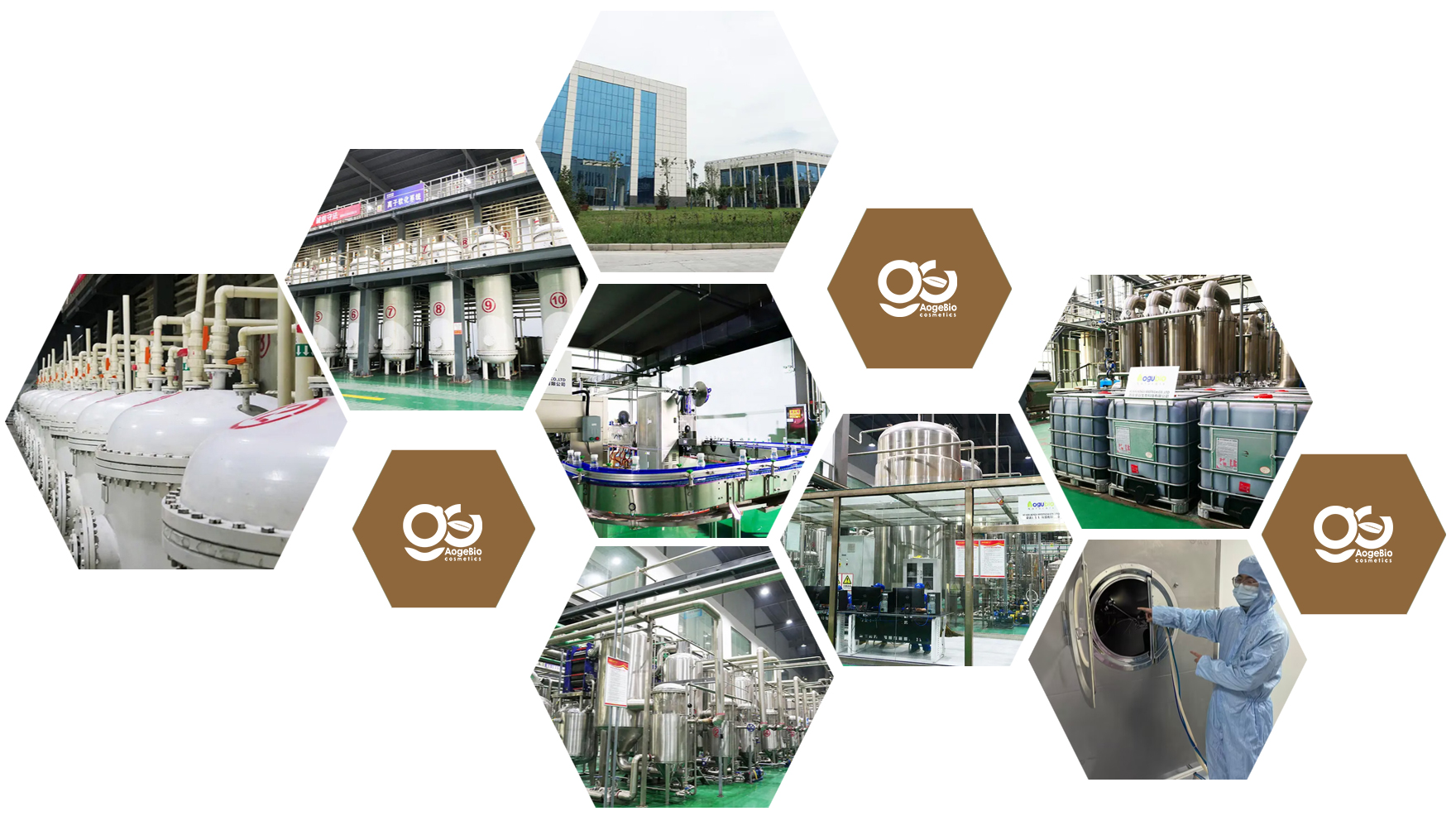
Our in-house laboratory is equipped with cutting-edge instruments for rigorous quality control. We utilize UPLC and HPLC for analyzing active components, GC and GC-MS for detecting solvent residues, ICP-MS for identifying heavy metals, and GC/LC-MS-MS for assessing pesticide residues. Additionally, we employ HPTLC and IR for identification purposes, ELISA for determining ORAC values, PSL for evaluating irradiation residues, and conduct comprehensive microbiology tests. These measures guarantee that our raw materials adhere to stringent international standards.
At Aogebio, innovation, quality, and sustainability are the bedrock of our corporate philosophy — delivering squalane raw materials that meet the exacting demands of global cosmetic formulators.
We pour relentless efforts into research and development, constantly exploring novel raw materials and advanced manufacturing techniques to stay ahead in the dynamic cosmetics industry.
Rigorous quality control is embedded in every step of our production process, from raw material sourcing to final product delivery, guaranteeing that each item adheres to the most stringent international standards.
We actively embrace sustainable practices, striving to minimize our environmental footprint through eco-friendly production methods and responsible sourcing of plant-derived squalane precursors.
This unwavering dedication enables us not only to consistently offer products of unparalleled excellence but also to contribute to the long-term, healthy development of the entire cosmetics industry.
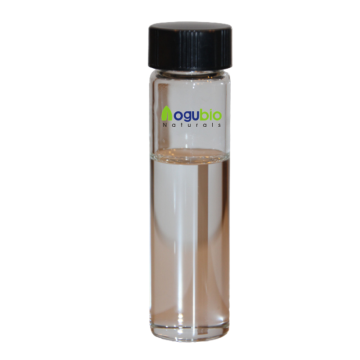
From concentrated raw actives to ready-to-formulate complexes, our complete squalane product portfolio supports every stage of moisturizing and barrier-repair product development.
Whether you are developing a new moisturizing line, reformulating a barrier-repair collection, or sourcing pharmaceutical-grade squalane at scale — our team of expert formulators and supply chain specialists is ready to support your project from concept to commercial launch.
Request Samples & Pricing →